#25 - Ecotherapy: A Return Home.
#25 - Ecotherapy: A Return Home.
Burnout. Anxiety. Chronic Stress. Disconnection.
We try to navigate them with more thinking, more doing, more control.
But what if healing doesn’t begin in the mind…
but in our body, and in our relationship with the living world?
This is exactly where ecotherapy begins.
--
What Is Ecotherapy? Definition and Origins
Ecotherapy is a form of psychotherapy that takes place in relation to nature. It is based on ecopsychology, a field that explores the relationship between human well-being and the natural world.
Put simply:
Ecopsychology is the theory
Ecotherapy is the practice
It is not about escaping life.
It is about returning to our roots, our life, more fully, more slowly, more truthfully.
--
What is Ecopsychology? Origins and Meaning
The word “eco” comes from the Greek ‘oikos’, which means ‘home.’
Ecopsychology, ecology, and ecotherapy all point toward the same idea: a return home.
The roots of ecopsychology can be traced back to Arne Naess, who introduced the concept of deep ecology in 1973, inviting us to see humans as part of a larger living system rather than separate from it.
Later, Theodore Roszak formally coined the term *ecopsychology* in 1992. He described it as “the study of the relationship between environmental destruction and the mental health of human beings. It assumes that human psychology has been profoundly shaped by our relationship to the environment and that many of our psychological problems are directly related to the ways in which we have become disconnected from the natural world” (Theodore Roszak, The Voice of the Earth, 1992).
Eco-philosopher Joanna Macy further explored this connection, particularly through the lens of ecological grief, collective healing, activism and our deep emotional bond with the planet.
At its core, ecopsychology reminds us of something simple, yet often forgotten: our mental, emotional, and physical wellbeing are deeply intertwined with the health of the Earth.
--
What Does Ecotherapy Look Like in Practice?
Ecotherapy can take many forms, depending on the practitioner, the environment and the client. Ecotherapy can include:
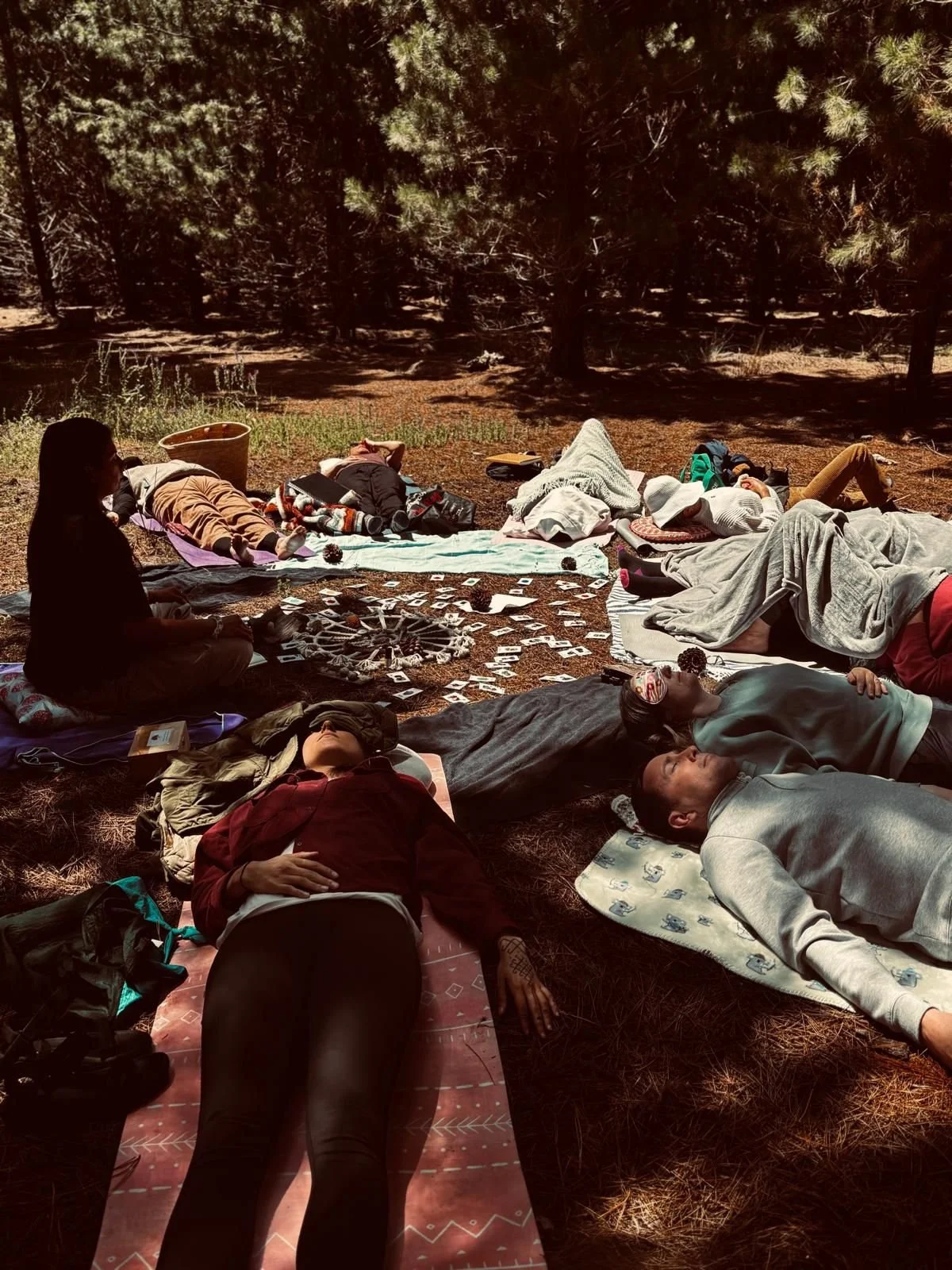
Forest bathing (a Japanese practice of slow, sensory immersion in nature)
Walk-and-talk therapy sessions outdoors
Mindfulness and grounding practices in natural settings
Therapeutic horticulture and gardening
Animal-assisted therapy
Wilderness and adventure therapy
Nature-based rituals, reflection, and journaling
Green exercise (such as walking, running, or movement outdoors).
Ecotherapy is not about performance or achievement. It is about presence. It’s about being in the now.
In my work, I often see how quickly the nervous system begins to settle once we step outside. Within a few minutes, my clients slow down and breathe better when they step into the forest. The body softens. The breath deepens. Something begins to shift without forcing anything. This is what I call coming back to the wilder, the more natural self.
--
Why Does Ecotherapy Matter Today?
We are living in a world of constant stimulation.
Screens, notifications, information, pressure, social media.
We are more connected than ever yet increasingly disconnected from ourselves, from each other, and from the Earth.
We have to move fast. Think fast. Live fast.
This is not sustainable. This is not what we are meant to be doing.
As if we have forgotten something essential: we are human beings, not human doings.
Ecotherapy invites us to slow down.
Reconnecting with the Earth is not a luxury. It is a necessity.
Because disconnection from nature is not just an environmental issue.
It is a psychological one. It’s mental, physical and spiritual well-being.
--
A Personal Perception: Ecotherapy as Remembering
Before I had the words for it, I was already practising ecotherapy.
As a child, exploring, following ants, playing with sticks, being curious.
Each time I paused to feel the sun on my skin, to watch the clouds, to listen to the wind.
And the truth is, you probably have too.
Ecotherapy is not something entirely new.
It is something we remember.
It is found in simple moments like:
Smelling a flower
Touching the grass
Looking at the clouds in the sky
Walking in the forest without your phone
These moments are not insignificant.
They are the beginning of reconnection.
They are the bridge to belonging.
--
My Definition of Ecotherapy
Ecotherapy goes beyond a method or a technique. It is:
An attitude
An ongoing practice
A way of relating to the world.
For me, ecotherapy is a return home.
Not just the Earth as a place, but the Earth as a relationship.
A relationship that reminds us how to slow down, how to feel, how to belong.
It is a space where we can:
Reconnect with our bodies
Explore our inner world
Process grief and emotions
Rediscover a sense of meaning and connection
Ecotherapy is not linear.
It is a process. A natural, ancient, and deep process.
Gentle. Cyclical. Alive.
--
A Return Home
We often search far and wide for healing.
Yet the invitation is simple.
Step outside. Breathe again.
Notice your body’s sensations.
Slow down. Listen. Feel.
The Earth is not separate from us.
It is where we come from and where we return.
You are nature.
Ecotherapy is not about becoming someone new.
It is about coming back to who you already are.
If you feel the call to reconnect, I would be honoured to walk alongside you on this path.
--
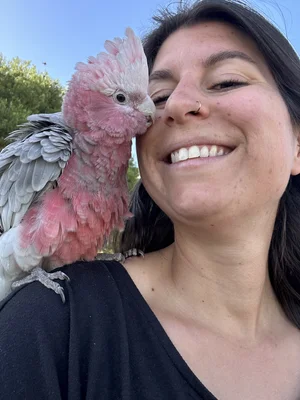
Hello! I am Sarah Frustié: a bilingual ecotherapist, holistic counsellor, and forest guide, working between the Adelaide Hills, Australia, and France, Europe.
I support people, especially those in caring professions, experiencing burnout, chronic stress, and emotional exhaustion. Through ecotherapy, walk-and-talk sessions, and nature-based retreats, I walk alongside clients, guiding them to slow down, reconnect with themselves and the living world.
With a background in humanitarian work and mental health across Europe, Asia, and Australia, I bring a compassionate, inclusive, whole-person and trauma-informed approach to my work. My mission is simple: to guide people back to themselves, through nature, in ways that are nourishing, sustainable, safe, sacred, and deep.
If you’re ready to slow down and reconnect with your wild self, I offer a free 20-minute phone call to explore how nature can support you.
Book your call: sarahfrustietherapy.com/bookings